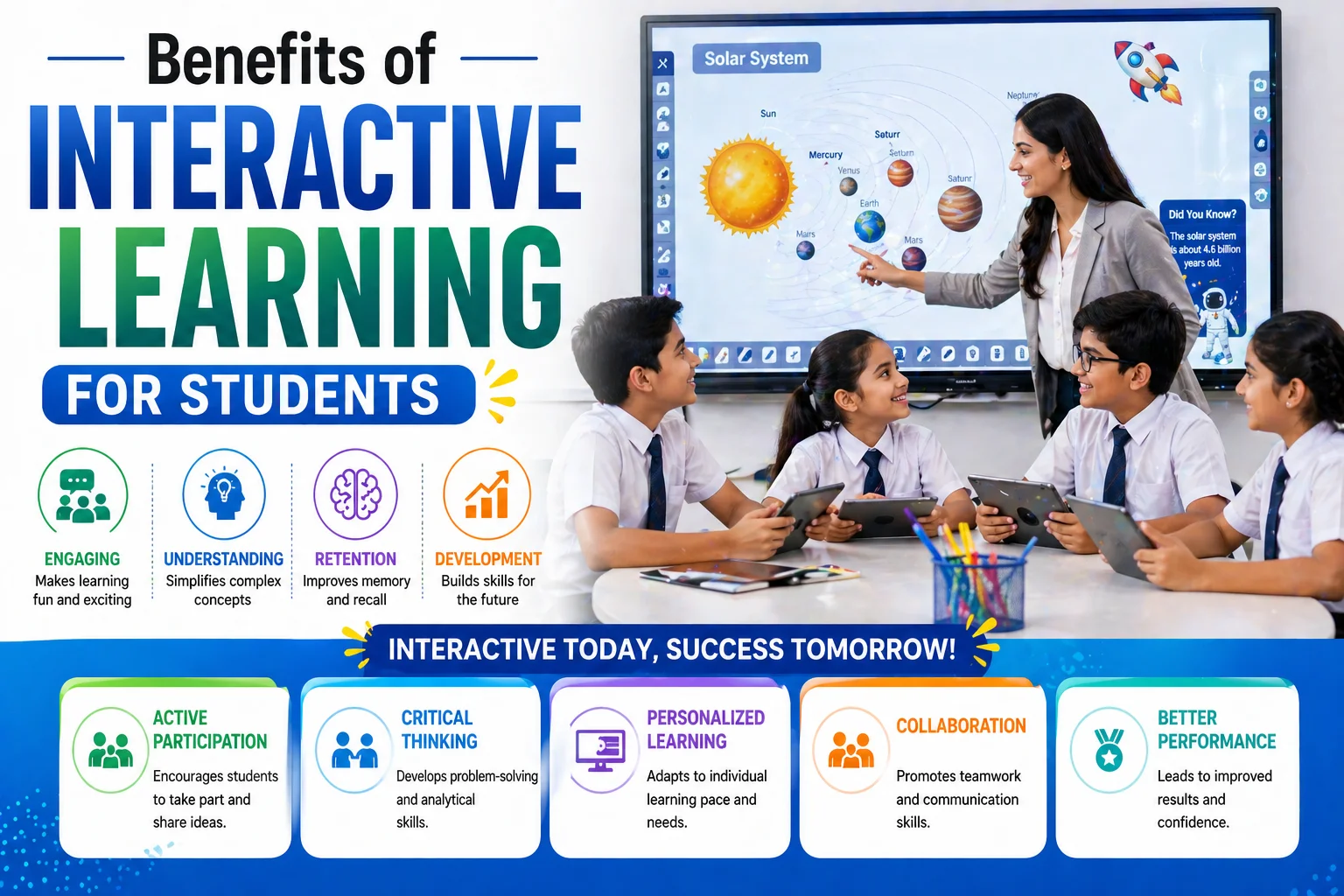
Education is evolving rapidly, moving away from traditional lecture-based methods toward more engaging and student-centered approaches. One of the most effective and impactful methods in modern education is interactive learning.
Interactive learning focuses on active participation, collaboration, and real-time engagement, allowing students to become part of the learning process rather than just passive listeners. This approach is transforming classrooms into dynamic environments where students can explore, question, and understand concepts more deeply.
🚀 What is Interactive Learning?
Interactive learning is a teaching method that encourages students to actively participate in lessons through discussions, activities, technology, and hands-on experiences.
Instead of simply listening to lectures, students engage with content using tools like smart boards, digital platforms, group activities, quizzes, and simulations.
This approach promotes two-way communication between teachers and students, making learning more effective and enjoyable.
🎯 Key Benefits of Interactive Learning
1. Increased Student Engagement
One of the biggest advantages of interactive learning is that it keeps students actively involved. When students participate in discussions, activities, and digital interactions, they are more attentive and interested.
Engaged students are less likely to feel bored and more likely to stay focused throughout the lesson.
2. Better Understanding of Concepts
Interactive learning helps students understand concepts more clearly. Visual aids, real-life examples, and hands-on activities make complex topics easier to grasp.
Instead of memorizing information, students develop a deeper understanding of the subject.
3. Improved Knowledge Retention
Studies show that students remember information better when they actively participate in learning. Interactive methods such as quizzes, discussions, and practical exercises help reinforce knowledge.
This leads to better long-term retention compared to traditional teaching methods.
4. Development of Critical Thinking Skills
Interactive learning encourages students to think, analyze, and solve problems. Activities like group discussions, case studies, and simulations help students develop critical thinking and decision-making skills.
These skills are essential for real-world success.
5. Encourages Collaboration and Teamwork
Group activities and collaborative tasks help students learn how to work together. They share ideas, solve problems as a team, and learn from each other.
This builds important social and communication skills.
6. Boosts Confidence and Participation
When students are encouraged to speak, ask questions, and share their ideas, their confidence naturally increases.
Interactive learning creates a safe environment where students feel comfortable expressing themselves.
7. Personalized Learning Experience
Every student learns at a different pace. Interactive learning allows teachers to adapt their methods based on individual needs.
Digital tools and smart systems can provide customized content, ensuring that every student benefits from the lesson.
🧠 Role of Technology in Interactive Learning
Technology plays a major role in enabling interactive learning. Tools such as:
- Smart boards and interactive panels
- Educational apps and platforms
- Virtual Reality (VR) and Augmented Reality (AR)
- Online quizzes and assessments
These tools make learning more engaging and provide students with real-time feedback and immersive experiences.
🌍 Interactive Learning in India
In India, interactive learning is gaining popularity, especially with the adoption of smart classrooms and digital education platforms.
Schools and colleges are increasingly integrating technology into their teaching methods to improve learning outcomes. Government initiatives and EdTech companies are also promoting digital and interactive education.
However, there is still a need to expand access to interactive learning in rural areas and ensure proper teacher training.
⚠️ Challenges to Consider
While interactive learning offers many benefits, there are some challenges:
- Need for proper infrastructure and technology
- Training teachers to use modern tools effectively
- Managing classroom participation and time
- Ensuring equal access for all students
Addressing these challenges is important for successful implementation.
🔮 The Future of Interactive Learning
The future of education lies in making learning more engaging, personalized, and technology-driven.
We can expect:
✔ More use of AI and data-driven learning
✔ Increased adoption of VR and AR technologies
✔ Fully digital and connected classrooms
✔ Greater focus on skill-based and experiential learning
Interactive learning will continue to play a key role in shaping future-ready students.
🏁 Conclusion
Interactive learning is transforming education by making it more engaging, effective, and student-centered. It encourages participation, improves understanding, and helps students develop essential skills for the future.
As education continues to evolve, interactive learning will become a standard approach, ensuring that students are not just passive learners but active participants in their own growth.
By embracing interactive learning, educational institutions can create environments that inspire curiosity, creativity, and success.