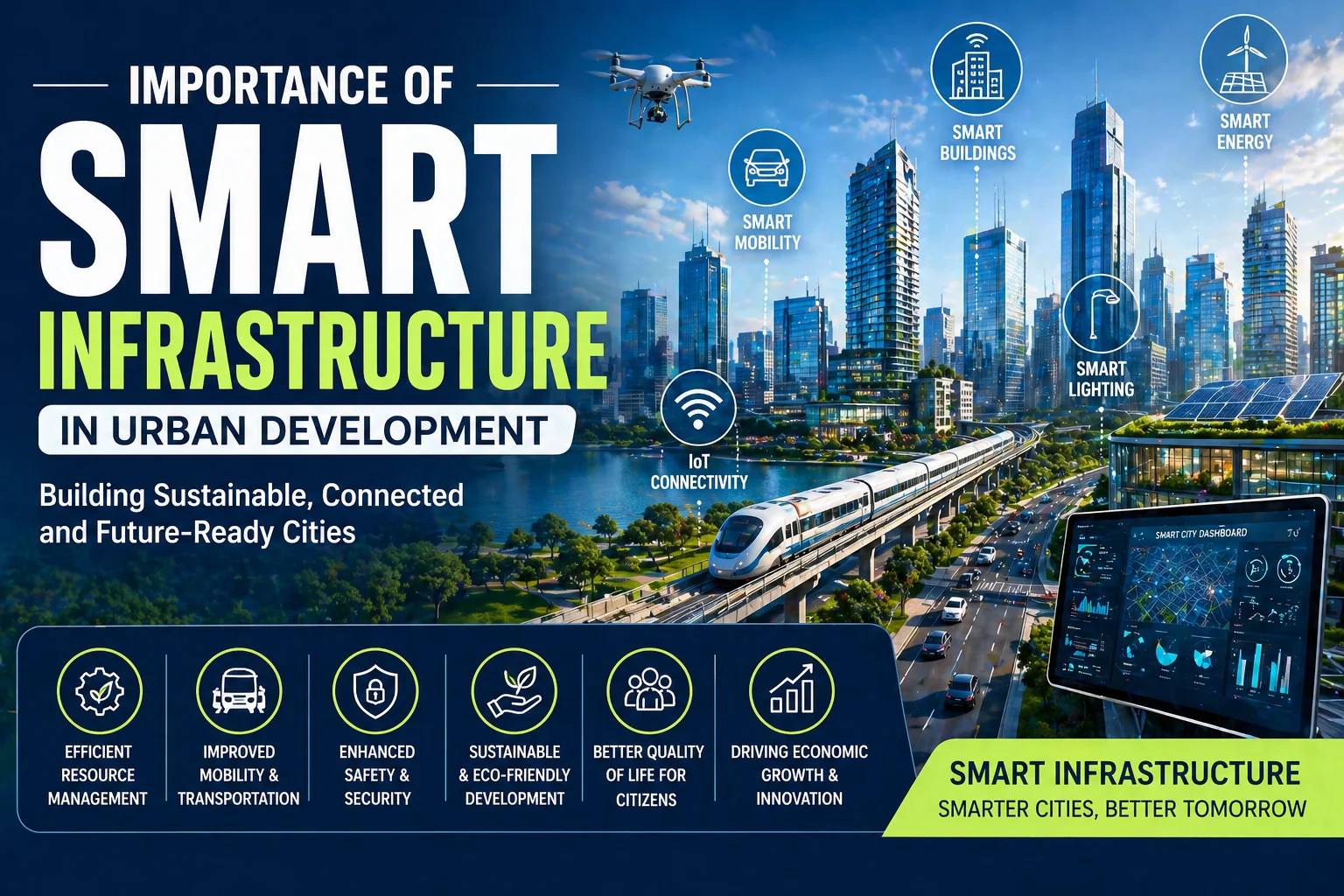
As cities continue to grow rapidly, urban areas are facing increasing challenges such as population density, traffic congestion, resource management, and environmental sustainability. To address these issues, cities around the world are turning toward smart infrastructure—a modern approach that integrates technology, design, and data-driven systems into physical spaces.
Smart infrastructure is not just about advanced buildings or digital systems; it is about creating efficient, sustainable, and connected urban environments that improve the quality of life for citizens.
🚀 What is Smart Infrastructure?
Smart infrastructure refers to the use of technology, IoT (Internet of Things), automation, and data analytics to enhance the performance and functionality of urban systems. This includes smart transportation, digital communication systems, intelligent buildings, and connected public services.
It transforms traditional infrastructure into responsive and adaptive systems that can monitor, analyze, and improve operations in real-time.
🎯 Why Smart Infrastructure is Essential for Urban Growth
1. Efficient Resource Management
Urban areas consume vast amounts of resources like electricity, water, and fuel. Smart infrastructure helps optimize the use of these resources through automation and monitoring systems.
For example, smart grids and intelligent water management systems can reduce wastage and improve efficiency.
2. Improved Mobility and Transportation
Traffic congestion is one of the biggest challenges in cities. Smart transportation systems use real-time data, sensors, and AI to manage traffic flow, reduce congestion, and improve public transport efficiency.
Smart parking systems and digital navigation tools also enhance the commuting experience.
3. Enhanced Public Safety
Smart infrastructure improves safety through technologies such as surveillance systems, emergency response networks, and real-time monitoring.
Authorities can respond faster to emergencies and ensure better security for citizens.
4. Sustainable Urban Development
Sustainability is a key goal for modern cities. Smart infrastructure supports eco-friendly practices by reducing energy consumption, lowering emissions, and promoting green building designs.
This helps cities move toward a more environmentally responsible future.
5. Better Citizen Experience
Smart infrastructure enhances the overall experience of living in a city. Digital displays, smart kiosks, and connected services provide easy access to information, making everyday life more convenient.
From paying bills online to accessing public services digitally, citizens benefit from improved accessibility and efficiency.
🧠 Key Components of Smart Infrastructure
🌐 Internet of Things (IoT)
IoT devices collect and share data from various systems, enabling real-time monitoring and decision-making.
🤖 Artificial Intelligence (AI)
AI analyzes data to optimize operations, predict issues, and improve efficiency across different sectors.
☁️ Cloud Computing
Cloud platforms store and process large amounts of data, making it accessible anytime, anywhere.
📊 Data Analytics
Data-driven insights help governments and organizations make informed decisions for better urban planning.
🌍 Smart Infrastructure in India
India is actively moving toward smart urban development through initiatives like the Smart Cities Mission. Several cities are adopting smart solutions such as intelligent traffic systems, digital governance platforms, and energy-efficient infrastructure.
These developments aim to create cities that are not only modern but also inclusive and sustainable.
Private sector participation is also playing a crucial role in implementing smart infrastructure projects across commercial and public spaces.
⚠️ Challenges in Implementation
Despite its benefits, implementing smart infrastructure comes with challenges:
- High initial investment costs
- Need for robust digital infrastructure
- Data privacy and cybersecurity concerns
- Coordination between multiple stakeholders
Overcoming these challenges requires strong planning, collaboration, and policy support.
🔮 The Future of Smart Cities
The future of urban development lies in creating fully connected smart cities where infrastructure, services, and people are seamlessly integrated.
We can expect:
✔ Intelligent buildings with automated systems
✔ Smart energy grids and renewable energy integration
✔ Advanced transportation systems with minimal congestion
✔ Digital governance for faster public services
✔ Enhanced urban planning using real-time data
Smart infrastructure will play a key role in shaping cities that are efficient, sustainable, and future-ready.
🏁 Conclusion
Smart infrastructure is no longer a luxury—it is a necessity for modern urban development. As cities continue to expand, the need for efficient, connected, and sustainable systems becomes more critical.
By integrating technology into infrastructure, cities can improve resource management, enhance safety, and provide a better quality of life for their citizens.
The journey toward smart cities has already begun, and smart infrastructure will be at the heart of this transformation—building a future where urban living is smarter, safer, and more sustainable.