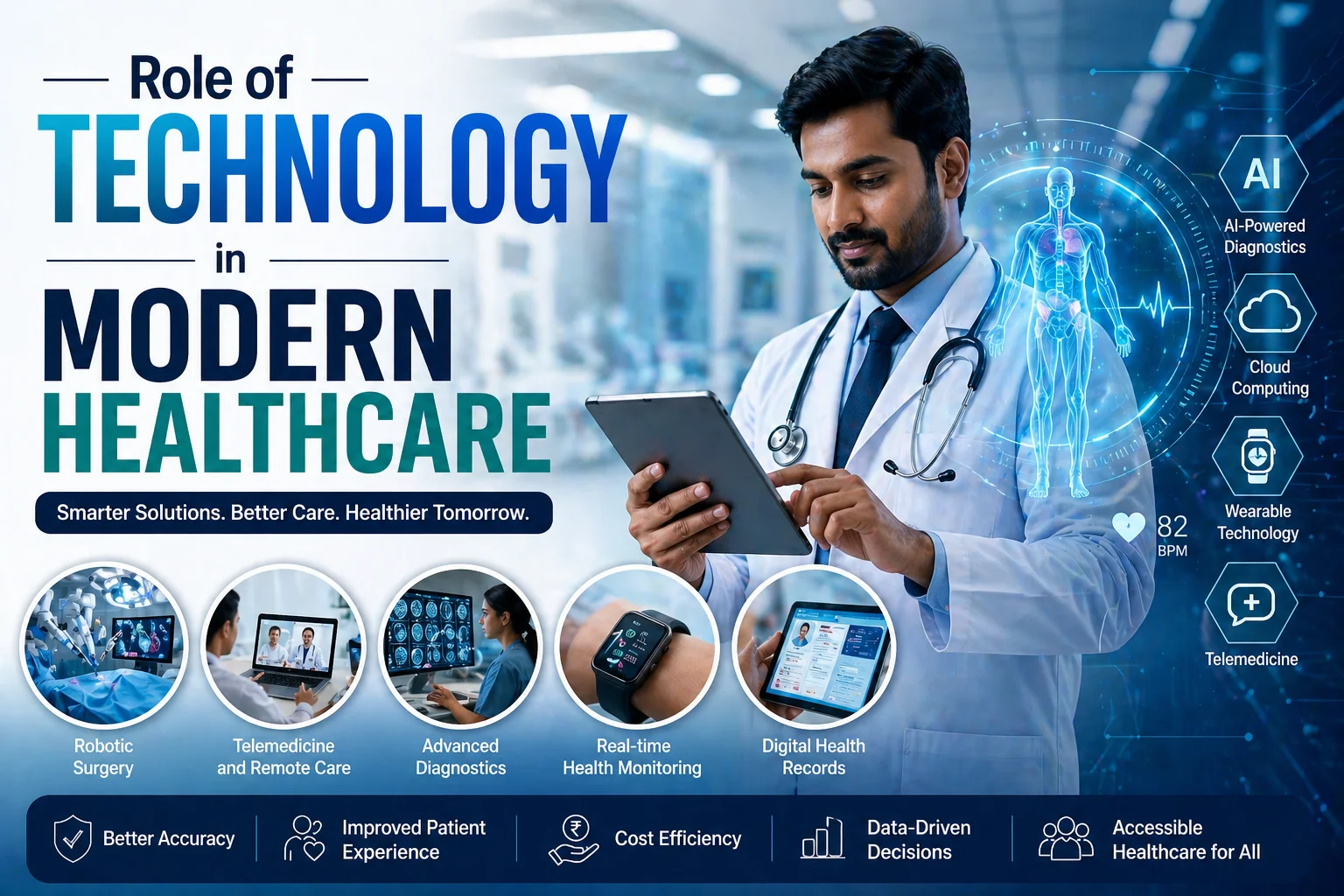
The healthcare industry has witnessed a significant transformation over the past few decades, driven by rapid advancements in technology. From improved diagnostics to digital patient management, technology is reshaping how healthcare services are delivered and experienced. Today, modern healthcare is not just about treatment—it is about efficiency, accuracy, accessibility, and patient-centric care.
Technology has become an integral part of healthcare systems worldwide, helping medical professionals provide better care while improving operational efficiency.
🚀 Evolution of Healthcare Technology
Traditionally, healthcare relied heavily on manual processes, paper records, and limited diagnostic tools. However, with the introduction of digital systems, healthcare has evolved into a technology-driven ecosystem.
From electronic health records to AI-powered diagnostics, technology is enabling faster decision-making, reducing human errors, and enhancing the overall quality of care.
🎯 Key Areas Where Technology is Making an Impact
1. Digital Health Records (EHR/EMR)
Electronic Health Records (EHR) and Electronic Medical Records (EMR) have replaced traditional paper-based systems. These digital records allow healthcare providers to access patient information instantly, improving coordination and reducing duplication.
Doctors can now make more informed decisions with complete patient history available at their fingertips.
2. Telemedicine and Remote Care
Telemedicine has revolutionized access to healthcare, especially in remote and rural areas. Patients can now consult doctors through video calls, reducing the need for travel and saving time.
This has become particularly important in situations like pandemics, where physical visits are limited.
3. Advanced Diagnostics and Imaging
Modern diagnostic tools such as MRI, CT scans, and AI-powered imaging systems have significantly improved the accuracy of disease detection.
Early diagnosis leads to better treatment outcomes and increases the chances of recovery.
4. Artificial Intelligence (AI) in Healthcare
AI is playing a crucial role in analyzing large amounts of medical data to assist in diagnosis and treatment planning. It helps in identifying patterns, predicting diseases, and supporting clinical decisions.
AI is also being used in drug discovery and personalized medicine.
5. Wearable Technology and Remote Monitoring
Devices like smartwatches and fitness trackers allow continuous monitoring of vital health parameters such as heart rate, sleep patterns, and physical activity.
This helps in early detection of health issues and promotes preventive care.
6. Automation and Hospital Management Systems
Technology has streamlined hospital operations through automated systems for appointment scheduling, billing, patient flow management, and inventory control.
This improves efficiency and reduces waiting time for patients.
🧠 Improving Patient Experience
One of the most significant contributions of technology is enhancing the patient experience.
Digital displays in waiting areas, online appointment systems, and automated notifications keep patients informed and engaged. Patients can access their reports online, track their treatment progress, and communicate easily with healthcare providers.
This shift towards a patient-centric approach ensures better satisfaction and trust.
🌍 Bridging the Healthcare Gap
Technology is playing a vital role in reducing the gap between urban and rural healthcare services. Telemedicine, mobile health apps, and digital health platforms are making quality healthcare accessible to people in remote areas.
Government initiatives and private sector innovations are working together to create a more inclusive healthcare system.
⚠️ Challenges in Healthcare Technology
Despite its many advantages, the adoption of technology in healthcare comes with certain challenges:
- High cost of implementation
- Data privacy and security concerns
- Need for trained professionals
- Resistance to change in traditional systems
Addressing these challenges is essential to fully leverage the benefits of healthcare technology.
🔮 The Future of Technology in Healthcare
The future of healthcare will be even more technology-driven, with innovations such as:
✔ AI-powered diagnostics and treatment planning
✔ Robotic surgeries with higher precision
✔ Personalized medicine based on genetic data
✔ Integration of IoT devices for real-time monitoring
✔ Smart hospitals with fully automated systems
Healthcare will become more proactive than reactive, focusing on prevention rather than just treatment.
🏁 Conclusion
Technology has become the backbone of modern healthcare, transforming the way medical services are delivered. It has improved efficiency, enhanced accuracy, and made healthcare more accessible and patient-friendly.
As technology continues to evolve, it will play an even greater role in shaping the future of healthcare—creating systems that are not only advanced but also compassionate and inclusive.
In this rapidly changing world, embracing technology is no longer optional—it is essential for building a healthier and smarter future.