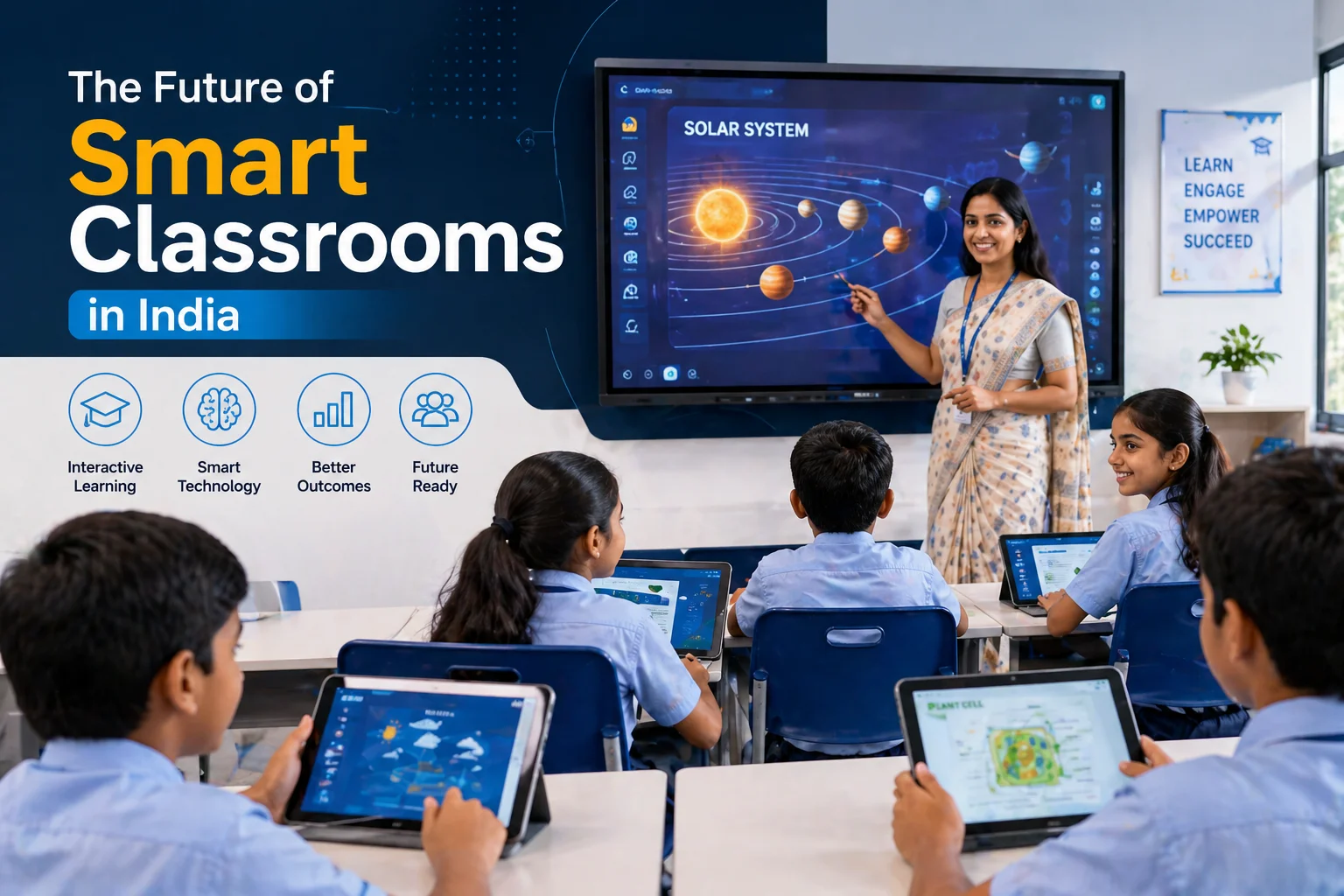
India is undergoing a massive transformation in its education system, driven by technology, innovation, and evolving learning needs. At the center of this transformation lies the concept of smart classrooms—a modern approach that is redefining how students learn and how teachers teach.
A smart classroom is not just about replacing blackboards with digital screens. It is a complete ecosystem that integrates interactive boards, multimedia content, internet connectivity, and advanced learning tools to create an engaging and dynamic learning environment.
🚀 Rise of Smart Classrooms in India
Over the past decade, India has made significant progress in adopting digital education. Government initiatives like Digital India, Samagra Shiksha, and Operation Digital Board have played a major role in promoting smart classrooms across schools and colleges.
Smart classrooms are now being introduced not only in private institutions but also in government schools to ensure equal access to quality education.
Recent developments show a rapid increase in implementation. Thousands of smart classrooms have already been set up across multiple states, improving learning conditions and accessibility.
🎯 Why Smart Classrooms Are the Future
1. Interactive and Engaging Learning
Traditional teaching methods often rely on passive learning. Smart classrooms change this by using videos, animations, and real-time interaction, making lessons more engaging and easier to understand.
2. Personalized Learning Experience
Every student learns differently. With smart technologies, lessons can be customized according to individual learning pace and style, ensuring better understanding and retention.
3. Improved Learning Outcomes
Studies and real-world implementations have shown that smart classrooms can significantly improve student performance and even increase school enrolment due to better learning environments.
4. Digital Skill Development
In today’s digital age, students need more than textbook knowledge. Smart classrooms help them develop essential skills like problem-solving, critical thinking, and digital literacy.
🧠 Emerging Technologies Shaping Smart Classrooms
The future of smart classrooms in India will be powered by advanced technologies such as:
🤖 Artificial Intelligence (AI)
AI-based systems can analyze student performance and provide personalized recommendations, helping teachers identify strengths and weaknesses.
🥽 Virtual Reality (VR) & Augmented Reality (AR)
Students can explore complex concepts through immersive experiences—like virtual science labs or historical tours—making learning more practical and memorable.
☁️ Cloud-Based Learning
Cloud platforms enable access to study materials anytime, anywhere, promoting continuous learning beyond classrooms.
📊 Data-Driven Insights
Teachers can use analytics to track student progress and improve teaching strategies in real-time.
🌍 Bridging the Urban-Rural Gap
One of the biggest advantages of smart classrooms is their potential to reduce the education gap between urban and rural India.
With digital tools and online resources, even students in remote areas can access quality educational content. However, challenges like internet connectivity and infrastructure still need to be addressed.
Government and private partnerships are playing a crucial role in expanding smart classroom access across the country.
⚠️ Challenges to Overcome
While the future looks promising, there are some challenges:
- Limited digital infrastructure in rural areas
- Lack of teacher training for new technologies
- High initial setup costs
- Need for continuous maintenance and updates
Addressing these issues is essential to ensure the successful implementation of smart classrooms nationwide.
🔮 What Lies Ahead?
The future of smart classrooms in India is not just digital—it is intelligent, immersive, and inclusive.
With rapid advancements in technology and strong government support, classrooms will soon evolve into fully connected learning environments where students can learn anytime, anywhere.
The focus will shift from rote learning to experiential learning, preparing students not just for exams but for real-world challenges.
🏁 Conclusion
Smart classrooms are no longer a luxury—they are becoming a necessity for modern education. They are transforming the way knowledge is delivered, making learning more engaging, accessible, and effective.
As India continues to invest in digital education, smart classrooms will play a crucial role in shaping the future of the next generation—creating learners who are not just informed, but innovative, skilled, and future-ready.